
10 Essential Commands Every Dog Should Learn
10 Essential Commands Every Dog Should Learn Training is not about teaching tricks. It is about creating a dog that understands how to behave in real life situations.Strong foundations make behav...
10 Essential Commands Every Dog Should Learn
Training is not about teaching tricks. It is about creating a dog that understands how to behave in real life situations.
Strong foundations make behaviour problems easier to prevent and easier to fix.
These are the essential commands every dog should learn to function calmly in daily environments.
1. Sit
Sit is the first control point. It teaches the dog to pause instead of reacting. This becomes useful in greetings, feeding routines, and managing excitement.
2. Stay
Stay builds impulse control. A reliable stay allows you to manage distance, prevent unsafe situations, and create calm behaviour before movement.
3. Come (Recall)
Recall is one of the most important commands for safety. A dog that returns when called can be safely managed in parks, open areas, and distraction heavy environments.
Reliable recall requires structured training, especially when distractions are present.
4. Heel / Loose Leash Walking
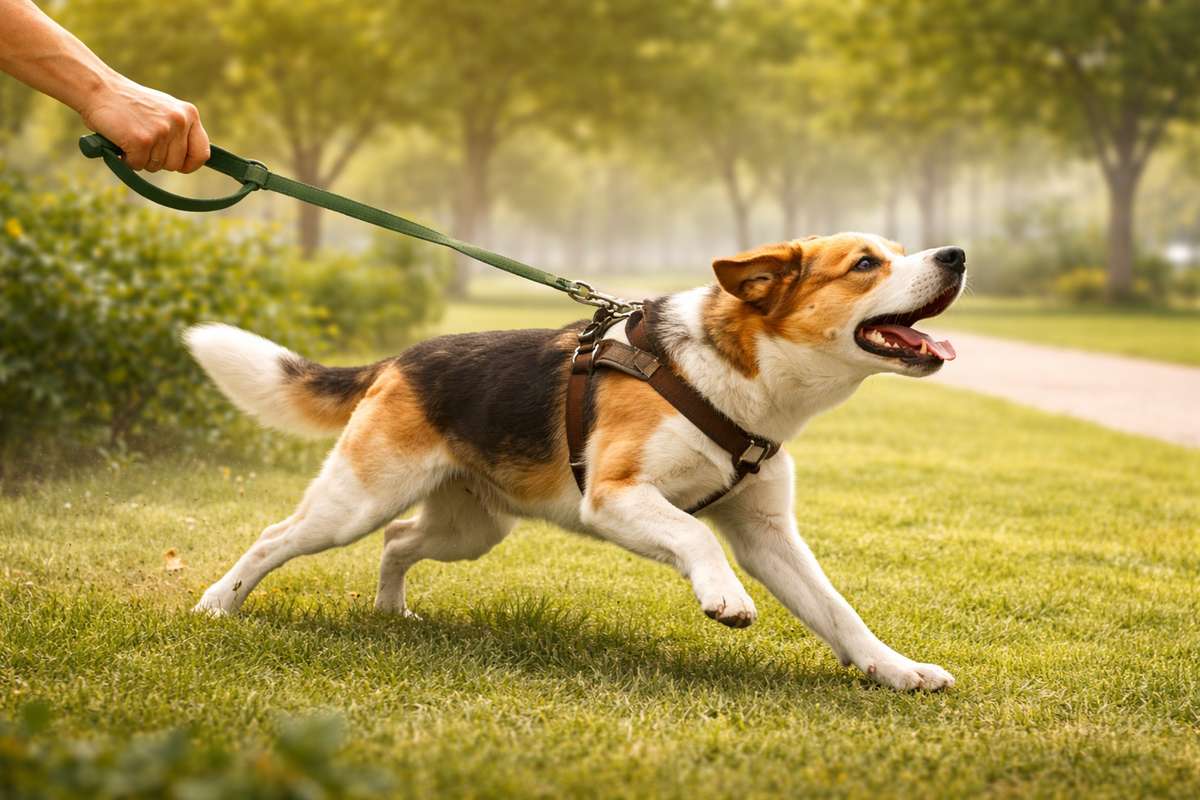
Walking calmly on leash prevents pulling, frustration, and reactivity.
Dogs that understand how to walk without tension are more relaxed and easier to guide in busy environments.
If your dog struggles with pulling, our guide on dog pulling on leash explains how to build this skill properly.
5. Down
Down promotes calmness. It is particularly useful in cafes, waiting areas, or when guests are present. It helps reduce overstimulation.
6. Leave It
Leave it teaches the dog to disengage. This is essential for preventing scavenging, avoiding unsafe objects, and controlling impulse around food or distractions.
7. Place / Bed
This command teaches the dog to go to a designated area and settle. It is extremely useful for managing behaviour when guests arrive or during household activity.
Structured environments often reinforce this command daily, improving reliability.
8. Drop It
Drop it ensures the dog releases objects safely. This is important for preventing resource guarding and avoiding dangerous situations.
9. Focus / Look
This command teaches the dog to redirect attention back to the handler. It is a key tool in distraction heavy environments and helps prevent reactivity.
10. Wait
Wait teaches patience before movement. It is used at doors, crossings, and transitions between environments.
This command improves overall impulse control and safety.
Why These Commands Matter
Commands are not isolated behaviours. They form a system that, when combined, allows for calm movement in public spaces, better response under distraction, safer handling, and reduced stress for both dog and owner. Dogs trained only at home often struggle outside, as real reliability comes from exposure to controlled distractions. Structured environments where dogs train around other dogs and stimuli help reinforce these behaviours consistently.
How to Train These Commands Effectively
Training should be short and consistent, based on clear reinforcement, practiced in different environments, and gradually increased in difficulty. High value rewards improve focus and speed of learning, especially when distractions are present.
When Basic Training Is Not Enough
If your dog struggles to follow commands outside the home, it is usually not a knowledge issue. It is an environment and consistency issue.
Training in structured environments, with controlled exposure and repetition, improves reliability significantly.
Frequently Asked Questions
What is the most important command for dogs?
Recall is the most important for safety, followed by stay and leash control.
How long does it take to teach basic commands?
Most dogs learn the basics quickly, but reliability under distraction takes longer and requires structured practice.
Can older dogs learn these commands?
Yes. Dogs of any age can learn with consistent reinforcement and structure.
The Bottom Line
Dog training basics are not optional. They are the foundation for safe, calm, and predictable behaviour.
When taught correctly and practiced in real environments, these commands create a dog that is easier to manage and more confident in daily life.
You Might Also Like

Why Your Dog Is Not Listening Even After Training
Your dog still doesn’t listen after training? Discover the real reasons why dog...
Read more
Is Dog Daycare Good or Bad? The Truth Most Owners Don’t Know
Is dog daycare good or bad? Discover the real pros and cons of dog daycare, and...
Read more
Dog Reactivity Explained: Why Your Dog Barks and Lunges on Walks
If your dog barks, lunges, or loses control on walks when seeing other dogs or p...
Read more
Dog Pulling on Leash: How to Stop Leash Pulling in Dogs (Step-by-Step)
If your dog pulls on the leash during walks, you’re not dealing with stubbornnes...
Read more